Minor Prophets: A Reader's Guide, Hosea to Malachi (2026)
The Minor Prophets are the twelve books that close the Old Testament in most English Bibles: Hosea, Joel, Amos, Obadiah, Jonah, Micah, Nahum, Habakkuk, Zephaniah, Haggai, Zechariah and Malachi. "Minor" means short, not less important. Together they fill 67 chapters and speak to Israel, Judah and the returned exiles across roughly three centuries.
Many year-long plans reach these twelve short books late in the year. Twelve names, a string of kings and three empires in a few weeks can feel like a wall. This guide gives each book its setting so the reading makes sense, and shows where the Twelve sit among the books of the Bible in order.
What "Minor" Means (and What It Does Not)
"Minor" describes length only. In The City of God (Book 18, chapter 29, in the New Advent translation), Augustine says these prophets are called minor "from the brevity of their writings." The label sorts the books by size, not by worth.
In the Hebrew Bible the twelve are counted as one book, called the Twelve, or the Book of the Twelve, and they fit on a single scroll. There they stand with Isaiah, Jeremiah and Ezekiel among the Latter Prophets. Protestant and Catholic Bibles list them as twelve books after Daniel, and Orthodox Bibles follow the Greek Septuagint, which orders them differently.
These are different ways of arranging the same books, and each has a long history. One scale fact helps when you plan your reading: all twelve together have 67 chapters, and Isaiah alone has 66. To see how that compares with the rest of Scripture, here is how many chapters are in the Bible, book by book.

The 12 Minor Prophets at a Glance
The table gives each book's length, its first audience and its rough setting. Each book name links to its overview page.
| Book | Chapters | Spoke to | Approximate setting (traditional dating) | Read it for |
|---|---|---|---|---|
| Hosea | 14 | Northern kingdom (Israel) | 700s BC; Hosea 1:1 names Uzziah to Hezekiah of Judah and Jeroboam of Israel | God's persistent love, pictured through Hosea's marriage |
| Joel | 3 (4 in Hebrew and some Catholic Bibles) | Judah | Date uncertain; proposals range from the 800s BC to after the exile | A locust plague, a call to return, the day of the Lord |
| Amos | 9 | Northern kingdom (Israel) | 700s BC; a herdsman of Tekoa (Amos 1:1), a town in Judah | Justice for the poor and honest worship |
| Obadiah | 1 (21 verses) | About Edom | Often linked to Jerusalem's fall in 586 BC; some date it earlier | Judgment on Edom for gloating over Judah |
| Jonah | 4 | Sent to Nineveh (Assyria) | Jonah is named in Jeroboam II's reign (2 Kings 14:25) | A narrative of a reluctant prophet and God's mercy to outsiders |
| Micah | 7 | Judah (and Samaria) | 700s BC; Micah 1:1 names Jotham, Ahaz and Hezekiah; a contemporary of Isaiah | Justice, mercy and humility; hope beyond judgment |
| Nahum | 3 | About Nineveh | 600s BC, before Nineveh fell in 612 BC | The fall of the empire that conquered Israel |
| Habakkuk | 3 | Judah | Late 600s BC, as the Babylonians (Chaldeans, Habakkuk 1:6) rise | A prophet's honest questions and a closing prayer of trust |
| Zephaniah | 3 | Judah | 600s BC, in the days of Josiah (Zephaniah 1:1) | The day of the Lord and a remnant who are gathered and restored |
| Haggai | 2 | Returned exiles in Jerusalem | 520 BC, the second year of Darius (Haggai 1:1) | Rebuilding the temple |
| Zechariah | 14 | Returned exiles in Jerusalem | From 520 BC (Zechariah 1:1), alongside Haggai | Night visions and encouragement to rebuild |
| Malachi | 4 (3 in Hebrew and some Catholic Bibles) | Returned community | Probably 400s BC, with the temple rebuilt | A dialogue of questions and answers about faithfulness |
Dates follow traditional and common scholarly placement. Where views differ, especially for Joel, Obadiah and the writing of Jonah, both views exist, and this guide chooses neither.
The Twelve, One Book at a Time
Each note gives the book's setting from its first verse and one way into the reading. If the big story is still hazy, a short Bible summary helps you place these books in it first.
Hosea
Hosea 1:1 places Hosea in the days of Uzziah, Jotham, Ahaz and Hezekiah of Judah, and of Jeroboam of Israel. He spoke mainly to the northern kingdom in the 700s BC. The book pictures God's love for an unfaithful people through Hosea's own marriage.
Read chapters 1 to 3 as the marriage story, then chapters 4 to 14 as poetry that grows out of it. Chapter 6 is a good place to slow down, and chapter 14 closes with a call to return and a promise of healing. See the Hosea book overview for themes and key verses.
Joel
Joel 1:1 names the prophet as the son of Pethuel, and little else is known about him. The book speaks to Judah after a locust plague and calls the people to turn back to God. Its date is uncertain, and proposals run from the 800s BC to after the exile.
Chapter 1 describes the locusts, and chapter 2 turns to a call to return with the whole heart. Watch for "the day of the Lord" (Joel 1:15, NHEB), the prophets' phrase for God's coming judgment and rescue in their own setting. Hebrew Bibles split Joel into 4 chapters, so verse numbers can differ; see the Joel book overview.
Amos
Amos 1:1 calls Amos one of "the herdsmen of Tekoa" (NHEB), a town in Judah, in the days of Uzziah of Judah and Jeroboam of Israel. He was sent north to Israel in the 700s BC. His message presses for justice for the poor and honest worship.
Chapters 1 and 2 open with judgments on Israel's neighbors before the focus turns to Israel itself. In chapter 5, God refuses Israel's feasts and offerings (5:21-23), and then the call comes:
"But let justice roll on like rivers, and righteousness like a mighty stream." (Amos 5:24, NHEB)
The book ends with a promise of rebuilding in chapter 9. Read more in the Amos book overview.
Obadiah
Obadiah 1:1 calls the book "the vision of Obadiah" (NHEB), a message about Edom, Judah's neighbor to the southeast. Edom is judged for violence against Jacob, its brother nation (Obadiah 1:10). Many readers link the book to Jerusalem's fall in 586 BC, and some date it earlier.
Obadiah has a single chapter of 21 verses, the shortest book in the Old Testament, so read it in one sitting. It helps to know that the book calls Edom by the name Esau, Jacob's brother. See the Obadiah book overview.
Jonah
Jonah is named in the reign of Jeroboam II (2 Kings 14:25), and the book sends him east to Nineveh, a great city of Assyria. It is told as a narrative about a reluctant prophet and God's mercy to outsiders. When the book was written is a separate question, and scholars place it at different dates.
Read all four chapters in one sitting, the way you would read a short story. After Nineveh is spared, Jonah prays in anger: "for I knew that you are a gracious God, and merciful, slow to anger, and abundant in loving kindness, and you relent of doing harm" (Jonah 4:2, NHEB, excerpt). The book ends with a question from God, not an answer; see the Jonah book overview.
Micah
Micah 1:1 places Micah in the days of Jotham, Ahaz and Hezekiah, kings of Judah, with a message "concerning Samaria and Jerusalem" (NHEB). He spoke in the 700s BC, in the same years as Isaiah. His book moves between judgment on corrupt leaders and hope beyond it.
Chapter 6 is set like a courtroom. The people ask which offerings would please God (6:6-7), and the answer comes back:
"He has shown you, O man, what is good. What does the Lord require of you, but to act justly, to love mercy, and to walk humbly with your God?" (Micah 6:8, NHEB)
The book closes in chapter 7 with a prayer to a God who pardons and shows compassion again. Read more in the Micah book overview.
Nahum
Nahum 1:1 calls the book "an oracle about Nineveh" (NHEB). It comes from the 600s BC, before Nineveh fell in 612 BC. Assyria had conquered the northern kingdom in 722 BC, so the book announces the fall of the empire that had crushed Israel.
Read Nahum soon after Jonah. The same city that was spared in Jonah is judged here, and the pairing shows how the prophets speak to different moments. Its three chapters are vivid poetry; see the Nahum book overview.
Habakkuk
Habakkuk is set in Judah in the late 600s BC, as God says he is raising up "the Chaldeans" (Habakkuk 1:6, NHEB), the Babylonians. The prophet asks why wrong goes unanswered, and God replies. It reads more like a conversation than a sermon.
Read chapters 1 and 2 as the dialogue, then chapter 3 as a prayer. The prayer ends while the prophet waits for invasion (3:16):
"For though the fig tree doesn't flourish, nor fruit be in the vines; the labor of the olive fails, the fields yield no food; the flocks are cut off from the fold, and there is no herd in the stalls: yet I will rejoice in the Lord. I will be joyful in the God of my salvation!" (Habakkuk 3:17-18, NHEB)
See the Habakkuk book overview for the book's outline.
Zephaniah
Zephaniah 1:1 dates the book to "the days of Josiah" (NHEB), king of Judah, in the 600s BC. It speaks to Judah about the day of the Lord in strong images of judgment. Then it turns to a remnant who are gathered and restored.
Read chapters 1 and 2 as warning to Judah and its neighbors, then watch chapter 3 turn toward hope. Reading 2 Kings 22 to 23, the story of Josiah's reign, gives useful background. See the Zephaniah book overview.
Haggai
Haggai 1:1 is dated to "the second year of Darius the king" (NHEB), which is 520 BC. The people had come back from exile in Babylon, but the temple in Jerusalem still lay in ruins. Haggai's messages urge the governor Zerubbabel, the high priest Joshua and the people to rebuild.
The book has only two chapters, and each message carries its own date, so it reads well in one sitting. Ezra 5 to 6 tells the same rebuilding story from the history side. See the Haggai book overview.
Zechariah
Zechariah's first message is dated "in the second year of Darius" (Zechariah 1:1, NHEB), the same year as Haggai. He also speaks to the returned exiles and encourages them to rebuild. Ezra 5:1 names Haggai and Zechariah together as the prophets of that time.
Chapters 1 to 6 hold a series of night visions, and chapters 7 and 8 answer a question about fasting. Chapters 9 to 14 are longer oracles in a different style, so take them slowly. See the Zechariah book overview.
Malachi
Malachi 1:1 calls the book "the word of the Lord to Israel by Malachi" (NHEB). It probably comes from the 400s BC, when the temple stood again but faithfulness had cooled. The book speaks to that community about worship, marriage and offerings.
Malachi is built as a dialogue: God makes a statement, the people ask a question back, and God answers. It is last of the Twelve in every tradition's order and is traditionally regarded as the latest in date, though some scholars date Joel or the writing of Jonah later. Hebrew Bibles count 3 chapters instead of 4; see the Malachi book overview.
Minor Prophets vs Major Prophets
In Protestant Bibles the Major Prophets are Isaiah, Jeremiah, Lamentations, Ezekiel and Daniel. They have 66, 52, 5, 48 and 12 chapters, or 183 in all, and Catholic Bibles also place Baruch with them. Lists that say "four" major prophets usually leave out Lamentations, a book of poetry traditionally linked to Jeremiah.
The Hebrew Bible groups the books another way. Lamentations and Daniel sit in the Writings, so its prophetic books are Isaiah, Jeremiah, Ezekiel and the Twelve. Some lists, including the site's own books of the Bible list, label Lamentations as poetry and Daniel as apocalyptic.
So was Daniel a major or a minor prophet? Christian Bibles count Daniel among the Major Prophets, while the Hebrew Bible places it in the Writings. These are different ways of grouping the same books, not a debate to settle.
| Group | Books | Total chapters | Where they sit |
|---|---|---|---|
| Major (Protestant count) | 5: Isaiah, Jeremiah, Lamentations, Ezekiel, Daniel | 183 | After the poetry books, before the Twelve |
| Minor (the Twelve) | 12: Hosea to Malachi | 67 | The last books of the Old Testament in Protestant and Catholic Bibles |
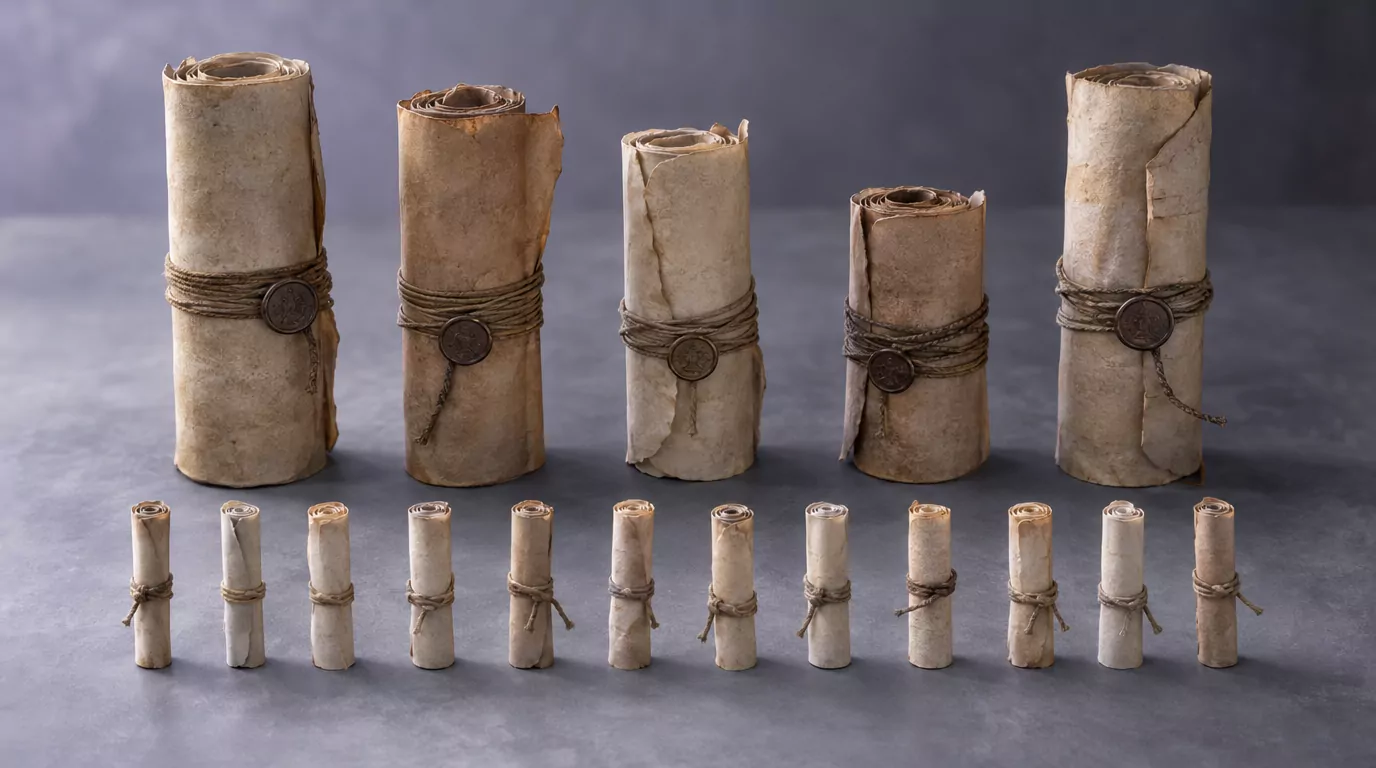
The real difference is length and scope, not importance. Both groups speak about covenant faithfulness, justice, judgment and hope. For the longer books, start with the overviews of Isaiah, Jeremiah, Lamentations, Ezekiel and Daniel.
Reading the Minor Prophets in Chronological Order
Bible order is not time order. One common grouping by era looks like this, and every placement in it is approximate:
- Assyrian era, 700s BC: Amos, Hosea, Jonah (the prophet's lifetime) and Micah.
- Judah's last century, 600s BC: Nahum, Zephaniah and Habakkuk.
- Around Jerusalem's fall, 586 BC: Obadiah, where it is often placed.
- After the return from exile: Haggai and Zechariah (520 BC), then Malachi.
- Date uncertain: Joel, placed anywhere from early to late.

The prophets make more sense next to the history they address. Read Hosea, Amos, Jonah and Micah alongside 2 Kings 14 to 20, which covers the kings of their era and names Jonah in 2 Kings 14:25. Read Haggai and Zechariah next to Ezra 5 to 6, where Ezra 5:1 names both prophets.
For a whole-Bible version of this idea, see the chronological Bible reading schedule and this guide on what order to read the Bible. BibleMate's plans page lists two chronological plans: the Bible Story Timeline and the Chronological Bible Plan (Original Edition) used later in this guide. No chronological order is settled, so treat each one as a helpful arrangement.
Other Prophets of the Old Testament
Samuel, Nathan, Elijah and Elisha are prophets whose stories are told in the history books (1 and 2 Samuel, 1 and 2 Kings) rather than in a book of collected prophecies. Deborah (Judges 4:4) and Huldah (2 Kings 22:14) are called prophetesses. Samuel's story fills much of 1 Samuel, and the two books of Samuel carry his name.
In Christian Bibles the books grouped as the Prophets are the Major Prophets and the Twelve. The Hebrew Bible's Prophets section also includes Joshua, Judges, Samuel and Kings, known as the Former Prophets. For a short answer on counting them, see "How many prophets are in the Old Testament?" in the FAQ below.
Where the New Testament Quotes the Twelve
Reading these books helps you recognize lines the New Testament quotes. A few clear examples:
- Hosea 6:6 in Matthew 9:13, where Jesus cites the words "I desire mercy, and not sacrifice" (Matthew 9:13, NHEB, excerpt).
- Joel 2:28-32 in Acts 2:16-21, at Pentecost. Hebrew Bibles number the Joel passage 3:1-5.
- Habakkuk 2:4 in Romans 1:17: "But the righteous shall live by faith" (Romans 1:17, NHEB, excerpt).
- Zechariah 9:9 in Matthew 21:5, the king who comes "riding on a donkey" (Matthew 21:5, NHEB, excerpt).
- Malachi 3:1 in Matthew 11:10: "Behold, I send my messenger before your face" (Matthew 11:10, NHEB, excerpt).
When you meet one of these lines in the Gospels or Acts, it can help to turn back and read it in its first setting.
Where the Minor Prophets Fall in a Reading Plan
In a cover-to-cover plan the Twelve arrive late, and they arrive fast. In the Classic 365-Day Plan on BibleMate's free web reader (no account needed), Hosea 1 to 3 starts on Day 228 and Malachi 4 closes on Day 250. That makes 23 days for all twelve books.
Each of those days also has a New Testament chapter and a Proverbs chapter. Day 228, for example, pairs Hosea 1 to 3 with 2 Peter 1 and Proverbs 11. The whole schedule is on the Classic 365-Day Plan grid.

The Chronological Bible Plan places the prophets among the history books instead. Obadiah and Joel come together on Day 143, Jonah on Day 144, Amos from Day 145, Hosea from Day 147 and Micah from Day 150.
Nahum and Zephaniah follow from Day 169, and Habakkuk on Days 170 to 171. Haggai and Zechariah start on Day 228, and Malachi comes on Days 232 to 233. This is the order that plan uses, not a settled chronology.
Neither plan has a fixed reading time, and each reader page shows that day's estimate. For other plan shapes, see these one-year Bible plans compared.
Tips for Keeping a Plan Going Through the Prophets
- Read the heading verse first. Verse 1 of most of these books tells you who spoke and when. A few seconds there saves confusion later.
- Open the book's overview before you start. A one-page view of the book gives you a map before the poetry begins. Short book videos, such as BibleProject's Hosea overview, can help too.
- Read the shortest books in one sitting. Obadiah, Haggai, Nahum and Jonah are the shortest of the Twelve. See the full list of the shortest books in the Bible.
- Keep a one-line note per book. Write who, when, the charge and the hope. Twelve lines become your own map of the Twelve.
- Expect poetry, judgment and hope side by side. Several books, such as Hosea, Amos, Micah and Zephaniah, close with restoration after judgment.
- If you fall behind, pick up today's reading. Your next reading matters more than the day you missed. There is no need to catch up all at once.
For the wider journey, this Old Testament reading plan guide shows how the prophets fit with the law, the history books and the poetry. Take the Twelve one day at a time, and let each short book be enough for that day.
BibleMate is on the App Store for iPhone and on Google Play for Android, free to download with optional in-app purchases (in the app, reading past Day 1 needs BibleMate Pro). Prefer your browser? The free web reader needs no account and walks you through any plan, the prophets included.
Frequently Asked Questions
What are the 12 minor prophets in the Old Testament?
In Bible order they are Hosea, Joel, Amos, Obadiah, Jonah, Micah, Nahum, Habakkuk, Zephaniah, Haggai, Zechariah and Malachi. They close the Old Testament in Protestant and Catholic Bibles. The Hebrew Bible counts them as one book, the Twelve.
What's the difference between the minor prophets and the major prophets?
The difference is length and scope, not importance. In Protestant Bibles the Major Prophets are Isaiah, Jeremiah, Lamentations, Ezekiel and Daniel, 5 books and 183 chapters, and Catholic Bibles also place Baruch with them. The Twelve are 12 books with 67 chapters in all.
What are the minor prophets about?
Read in their settings, the books are commonly understood to speak about covenant faithfulness, justice for the poor, judgment on wrongdoing and the hope of restoration. Each one addresses a specific moment, from the Assyrian threat to the return from exile. Its message is best read against that moment.
How many prophets are in the Old Testament?
There is no single count. In Protestant Bibles 17 books are grouped as the Prophets: the five Major Prophets, counting Lamentations, and the Twelve; Catholic Bibles add Baruch. More prophets appear in the history books, such as Samuel, Nathan, Elijah and Elisha, plus the prophetesses Deborah (Judges 4:4) and Huldah (2 Kings 22:14).
How long does it take to read the minor prophets?
The Twelve have 67 chapters. In the Classic 365-Day Plan they take 23 days, alongside daily New Testament and Proverbs readings. Reading speed varies, so there is no single time; for whole-Bible numbers, see how long it takes to read the Bible.